Choosing the right acoustic panels is not simply about finding the product with the highest NRC rating or the most attractive finish. The right solution depends on what is happening inside the room, how the space is used, the surfaces already present, the level of sound absorption required, and how the treatment will be installed.
A conference room, auditorium, home theatre, recording studio, classroom, restaurant, and industrial facility can all have completely different acoustic requirements. Understanding how to choose acoustic panels therefore starts with identifying the acoustic problem before selecting a particular material or product. At Thermofriz , acoustic solutions are approached from this application-first perspective.
With a broad range of acoustic products, custom manufacturing capabilities, project consultation, professional installation support, and more than 65 years of experience, we help project teams select acoustic treatments according to the requirements of the space rather than relying on a one-size-fits-all approach.
Start by Identifying the Acoustic Problem
Before choosing an acoustic panel, determine what you actually want the treatment to achieve. This is the most important step because different acoustic problems require different solutions.
Is Excessive Echo the Problem?
Hard surfaces such as glass, concrete, stone, tile, and exposed ceilings reflect sound. When too many reflections remain in a room, they can create noticeable echo and make conversations or other sounds less comfortable to hear. Sound-absorbing panels can help control these reflections by absorbing part of the sound energy instead of allowing it to continue reflecting around the room.
Is Reverberation Too Long?
Reverberation occurs when sound continues to persist in a space because of repeated reflections. Excessive reverberation can make speech difficult to understand and contribute to a noisy or uncomfortable environment. The appropriate acoustic treatment can help bring reverberation under control, but the required treatment depends on the room's size, function, surfaces, occupancy, and desired acoustic characteristics.
Is Speech Clarity Poor?
Speech intelligibility is particularly important in conference rooms, classrooms, offices, hospitals, auditoriums, training centres, and other spaces where people need to understand spoken communication clearly. In these environments, acoustic treatment can help reduce unwanted reflections and improve the conditions for communication.
Is the Problem Sound Transmission?
This is an important distinction. If noise is travelling from one room to another, entering a room from outside, or escaping from a room, the primary issue may be sound transmission rather than sound absorption . Acoustic panels can help manage sound within a room, but they should not automatically be considered a complete soundproofing system.
Sound isolation may require walls, ceilings, acoustic doors, sealing systems, insulation, barriers, or other building assemblies. For projects where both absorption and sound isolation need to be considered, explore Thermofriz's acoustic panels for soundproofing solutions.
Understand What Acoustic Panels Actually Do
Acoustic panels are primarily designed to manage sound within a space. Their principal role is to absorb unwanted sound energy and reduce excessive reflections and reverberation. The basic process can be understood as: Sound generated in a room → reflection from hard surfaces → acoustic absorption → reduced reflected energy → improved room acoustics This makes acoustic treatment particularly useful in rooms where hard architectural finishes create excessive reflections.
However, acoustic treatment is not synonymous with complete soundproofing. A room can have excellent sound absorption and still transmit sound through its walls, doors, ceilings, or other structural elements. Conversely, a properly sound-isolated room may still have poor internal acoustics if excessive reflections are not controlled.
Understanding this difference before selecting a product prevents one of the most common acoustic specification mistakes.
Consider the Room Before Choosing the Panel
Once you understand the acoustic problem, the next step is to understand the room itself. There is no reliable universal rule stating that a particular number of panels will work for every room. Acoustic requirements depend on the physical characteristics and intended use of the space.
Room Size and Volume
Floor area is only one part of the equation. Ceiling height and overall room volume also influence how sound behaves. A small meeting room and a large auditorium may have similar wall finishes but completely different acoustic requirements because of their volume, occupancy, geometry, and intended use. Larger spaces may also require a more carefully distributed acoustic treatment strategy rather than simply adding panels wherever wall space is available.
Room Shape
The geometry of a room influences how sound reflects. Parallel walls can create repeated reflections, while unusual architectural shapes can create other acoustic challenges. Large spaces with balconies, stages, curved surfaces, or complex ceiling structures may require a more detailed acoustic assessment. For technically demanding spaces, panel selection should therefore form part of the overall acoustic design.
Existing Surfaces
Take an inventory of the materials already present in the room. Glass, concrete, stone, tile, metal and other hard finishes generally reflect sound, while carpets, upholstered furniture, curtains and existing absorptive materials can contribute to sound absorption. This existing balance matters because the new acoustic panels are being added to an environment that may already contain some degree of absorption and reflection.
Occupancy
People also affect room acoustics. A room occupied by several hundred people can behave differently from the same room when empty. Seating, furniture, curtains and other interior elements also influence the overall acoustic response. For this reason, acoustic treatment should be considered according to how the room will actually be used rather than only how it appears on an architectural drawing.
Choose the Acoustic Panel Type Based on the Application
Once the room and acoustic problem have been established, you can begin comparing different acoustic panel types
There is no single material that is automatically the best for every project. The right choice depends on acoustic requirements, design objectives, installation conditions, durability requirements, and the character of the space.
| Acoustic Panel Type | Common Applications | Key Consideration |
|---|---|---|
| Wood Wool Boards | Commercial, institutional and educational spaces | Acoustic treatment with architectural durability |
| Glasswool | Commercial and specialised acoustic applications | Sound absorption and system configuration |
| Fabric Wrapped Panels | Offices, conference rooms, auditoriums and premium interiors | Acoustic absorption with decorative flexibility |
| Wooden Slat Panels | Commercial, hospitality and contemporary interiors | Acoustic treatment with architectural aesthetics |
| Acoustic Baffles | Large or open spaces | Overhead sound absorption |
| Acoustic Clouds | Large interior spaces | Ceiling-based acoustic treatment |
| Metal Acoustic Panels | Commercial and architectural environments | Acoustic function with metal finish |
| Sentetic Acoustic Products | Project-specific applications | Product configuration and design requirements |
The important point is not to select a material first and then try to make it fit the room. The acoustic requirement should guide the material selection.
The acoustic requirement should guide the material selection.
Match the Panel to the Type of Space
The intended use of a room is one of the strongest indicators of what its acoustic treatment should achieve.
Offices and Conference Rooms
Modern offices often combine glass, exposed ceilings, hard flooring, large open areas, and collaborative workspaces. These features can contribute to excessive reflections and distracting background noise. Acoustic panels can help improve speech clarity and reduce reverberation in meeting rooms, boardrooms, conference spaces, reception areas, and open-plan workplaces.
The objective is not simply to make the office quieter. It is to create a more comfortable acoustic environment where conversations, meetings, presentations, and collaboration can take place more effectively. For dedicated workplace applications, Thermofriz also provides office soundproofing solutions.
Home Theatres
A home theatre requires careful control of sound reflections to create an immersive listening environment. The acoustic treatment should account for room dimensions, speaker and seating positions, reflective surfaces, and the desired listening experience. Simply covering every available wall with absorptive material is not necessarily the right approach.
For dedicated home theatre projects, explore Thermofriz's Home Theater Acoustic Treatment solutions.f
Auditoriums and Multipurpose Halls
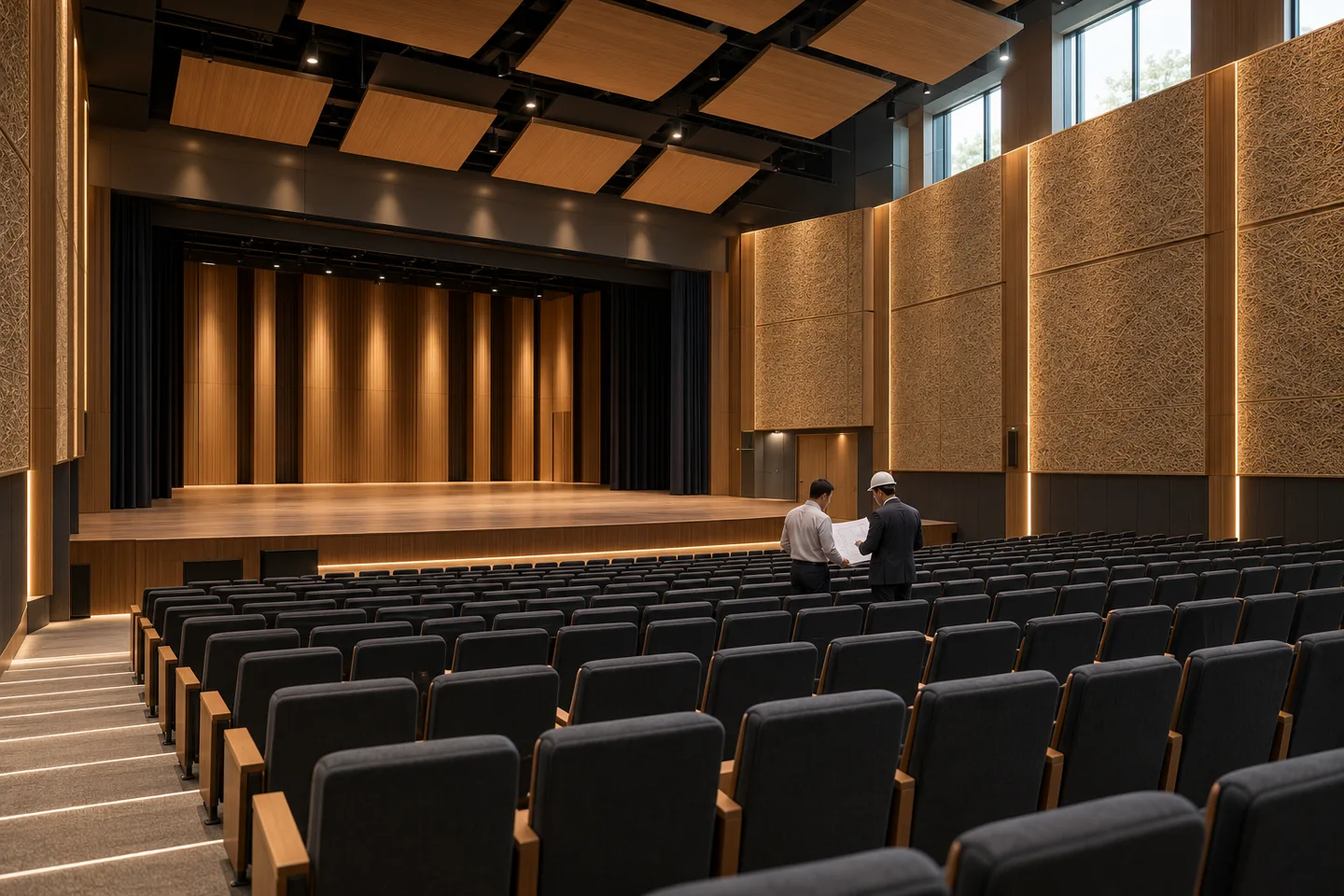
Auditoriums require particularly careful acoustic planning because they may need to accommodate speech, presentations, theatre, music, conferences, or multiple types of events. The treatment strategy may need to consider reverberation, speech intelligibility, stage acoustics, audience areas, wall reflections, ceiling reflections, and the architectural geometry of the hall.
This is where product selection should be integrated into the broader acoustic design rather than treated as a standalone purchase. Explore Auditorium Acoustic Panels and Auditorium Acoustic Treatment for dedicated auditorium applications.
Recording Studios
Recording environments require a more controlled acoustic response than many conventional rooms. The objective is not simply to maximise absorption. Reflections, frequency response, room modes, monitoring accuracy, and the intended use of the studio all need to be considered. For this reason, recording studios often require a combination of acoustic treatments selected according to the room's specific requirements.
Thermofriz provides dedicated Recording Studio Acoustic Design solutions for such applications.
Classrooms and Educational Spaces
In classrooms, lecture rooms, training centres, and educational facilities, speech intelligibility is a primary consideration. Students need to hear instructors clearly, while excessive reverberation can make communication more difficult and contribute to listening fatigue. Acoustic treatment can help create more comfortable learning environments by controlling unwanted reflections and improving the acoustic conditions for speech.
Healthcare Facilities
Healthcare spaces have their own acoustic requirements. Consultation rooms, patient areas, waiting spaces, hospitals, clinics, and rehabilitation environments can benefit from controlled reverberation and reduced unwanted sound reflections. Acoustic treatment can contribute to a calmer and more comfortable environment while supporting communication between patients, visitors, and healthcare professionals.
Hospitality and Restaurants
Restaurants, cafés, hotels, banquet halls, and hospitality environments often combine hard architectural surfaces with high occupancy and continuous conversation. Without appropriate acoustic treatment, sound can build up as background noise and make conversations increasingly difficult. Fabric, wood-based, ceiling-mounted, or other acoustic treatments can be incorporated into hospitality interiors while maintaining the desired architectural appearance.
Industrial Spaces
Industrial facilities present different acoustic challenges, particularly where machinery, equipment, production processes, and large reflective surfaces contribute to elevated noise levels. Industrial acoustic solutions need to consider not only sound absorption but also durability, the nature of the noise source, worker requirements, building structure, and whether sound needs to be contained or controlled at specific locations.
For these projects, acoustic panels may form part of a broader Industrial Noise Control Solutions strategy.
How to Evaluate NRC and Acoustic Performance
Once you have identified the room and the acoustic problem, the next step is to evaluate the performance of the acoustic panels you are considering. This is where technical specifications such as NRC rating become useful. NRC can provide a convenient indication of a material's sound absorption performance, but it should not be the only specification used to select an acoustic panel.
Frequency-specific absorption data, panel construction, thickness, mounting configuration, coverage, and the characteristics of the room should also be considered. If you want a deeper explanation of NRC itself, refer to our guide on What Is NRC Rating? A Practical Guide for Acoustic Panel Buyers.
Don't Choose a Panel Based Only on Its NRC
A higher NRC generally indicates greater sound absorption within the frequency range represented by the rating, but it does not automatically mean that the product is the right choice for every room. For example, an auditorium, recording studio, classroom, and office may all require sound absorption, but their acoustic objectives can be very different.
When comparing panels, consider:
NRC and absorption data — Understand how much sound the material absorbs.
Frequency response — Determine whether the product's absorption characteristics are appropriate for the sounds that matter in the space.
Panel construction — Consider the core material, facing and overall construction.
Thickness — Panel thickness can influence acoustic behaviour, particularly at different frequencies.
Mounting configuration — Laboratory performance can depend on how the panel is installed.
Coverage — A highly absorptive panel covering an insufficient area may not provide the desired room-level result.
The objective is therefore to select a complete acoustic treatment strategy rather than simply selecting the highest number on a product sheet.
How Much Acoustic Panel Coverage Does Your Room Need?
One of the most common mistakes when choosing acoustic wall panels is focusing on the performance of an individual panel while ignoring the amount of treatment required. There is no universal percentage of wall or ceiling area that works for every room. The appropriate coverage depends on factors such as room volume, existing absorption, surface materials, occupancy, intended use, acoustic targets, and the performance of the selected panels.
A small conference room with extensive glass may need a different treatment strategy from a large auditorium with concrete walls and a high ceiling.
Instead of asking only:
How many panels should I buy?
A better approach is:
How much sound absorption does this room require, and where should that absorption be located?
That distinction is important for achieving consistent acoustic results.
Why Strategic Placement Matters
Installing acoustic panels across every available surface is not necessarily the most effective approach. The location of treatment should be determined by the room's reflection patterns, acoustic objectives, furniture arrangement, speaker and listener positions where relevant, and the existing materials. In some rooms, wall treatment may provide the primary benefit.
In others, ceiling-mounted acoustic solutions may be more appropriate. Larger or more specialised spaces may require a combination of wall panels, ceiling systems, acoustic clouds, baffles, or other treatments.
Where Should Acoustic Panels Be Installed?
The ideal location depends on the room and the acoustic problem being addressed.
Reflection Points
First-reflection areas can be particularly important in spaces where speech, music or audio reproduction needs to remain clear. Strategically positioned absorptive panels can help control unwanted reflections before they interfere with the listening experience.
Large Reflective Walls
Large uninterrupted walls made from hard materials can create significant sound reflections. Treating selected areas of these surfaces can help reduce excessive reverberation while allowing the architectural design to remain visually balanced.
Ceilings
Ceilings are often overlooked despite being one of the largest reflective surfaces in many commercial and institutional spaces. Acoustic ceiling panels , clouds and baffles can provide additional absorption without consuming valuable wall space. They can be particularly useful in offices, classrooms, restaurants, large halls and other spaces with high ceilings or open layouts.
Rear Walls and Other Problem Areas
The rear portion of a room can sometimes contribute to unwanted reflections, particularly in larger rooms and performance environments. However, treatment should be based on the actual acoustic requirements rather than applying the same layout to every room.
Does Acoustic Panel Thickness Matter?
Yes, but thickness should not be considered in isolation. Panel thickness, material composition, density, mounting configuration, air gap and frequency response can all influence acoustic performance. Thicker absorptive constructions can provide greater absorption at certain lower frequencies, but that does not mean the thickest available panel is automatically the best option.
When comparing products, look at the complete acoustic test data and intended application rather than selecting thickness as a standalone specification.
What About an Air Gap?
An air gap between an acoustic panel and a hard wall can influence how sound interacts with the absorptive system. Depending on the panel construction and frequency range, an appropriately designed air gap can improve absorption performance. However, the optimum configuration varies between products. The safest approach is to follow the manufacturer's tested or recommended installation configuration rather than assuming that increasing the air gap indefinitely will always improve performance.
Should You Choose Acoustic Panels by Material?
Material selection should follow the acoustic and architectural requirements of the project.
Wood Wool Acoustic Panels
Wood wool boards can be considered for commercial, educational, institutional and other architectural applications where sound absorption needs to be combined with a distinctive, durable finish. Thermofriz's Wood Wool Boards collection provides multiple configurations for different architectural applications.
Glasswool Acoustic Panels
Glasswool-based acoustic systems can be suitable where sound absorption is a key requirement. Their suitability depends on the particular construction, finish, mounting arrangement and project requirements. Thermofriz offers a dedicated Glasswool product collection for applications requiring specialised acoustic treatment.
Fabric Wrapped Acoustic Panels
Fabric-wrapped systems can be particularly useful when sound absorption needs to coexist with a refined interior finish. The fabric surface provides considerable design flexibility, making these panels suitable for offices, conference rooms, auditoriums, educational spaces, hospitality interiors and other environments where aesthetics are important.
Thermofriz's Fabric Acoustic Panels form part of its broader acoustic product portfolio.
Wooden Slat Acoustic Panels
Wooden slat acoustic systems are suited to projects where acoustic treatment needs to become part of the architectural expression. They can complement contemporary offices, hospitality spaces, commercial interiors and other projects where designers want acoustic functionality without compromising the visual character of the room.
The important consideration is not which material is universally “best.” It is which material and construction are appropriate for your room, acoustic objective, design requirements and installation conditions .
Consider Aesthetics, Durability and Maintenance
Acoustic performance is important, but commercial acoustic projects also need to function as architectural interiors.
Interior Design
Acoustic treatment does not have to look like an add-on. Modern panels are available in different finishes, colours, textures, patterns and configurations, allowing them to become part of the overall interior design. For architects and interior designers, this makes material selection a balance between acoustic performance and visual integration.
Durability — The environment in which the panels will be installed should also influence product selection. Consider factors such as:
- Frequency of occupancy
- Potential physical impact
- Cleaning requirements
- Humidity or environmental conditions
- Accessibility
- Expected service life
- Maintenance requirements
A panel suitable for a controlled executive office may not necessarily be the ideal choice for a high-traffic institutional or public environment.
Maintenance — Maintenance requirements vary according to the material and finish. Before specifying a product, project teams should understand how the surface should be cleaned and maintained and whether the selected finish is appropriate for the intended environment.
Check Fire Performance and Technical Documentation
For commercial, institutional and public projects, acoustic performance is only one part of product selection. Architects, consultants, contractors and procurement teams should review the technical documentation relevant to the specific product and project requirements. Depending on the application, documentation may include:
- Acoustic test data
- Frequency-specific absorption data
- Installation instructions
- Product specifications
- Fire-related test documentation where applicable
- Material information
- Mounting requirements
- Maintenance guidance Most importantly, don't assume that all acoustic panels have identical technical characteristics simply because they belong to the same product category. The documentation should relate to the specific product and configuration being specified
Acoustic Treatment vs Soundproofing: Choose the Right Solution
This distinction deserves particular attention because the terms are frequently confused.
| Acoustic Treatment | Soundproofing |
|---|---|
| Controls sound within a room | Controls sound transmission between spaces |
| Primarily addresses reflection and reverberation | Primarily addresses sound passing through building elements |
| Uses sound-absorbing materials | May require walls, ceilings, doors, insulation and sealing |
| Improves room acoustic comfort | Reduces noise transfer |
| Often uses acoustic panels | Requires a broader sound isolation strategy |
If the problem is echo or excessive reverberation, acoustic treatment may be appropriate.
If the problem is sound travelling through a wall, floor, ceiling or door, additional soundproofing measures may be necessary. For projects where both requirements exist, acoustic treatment and sound isolation can be designed as complementary parts of the overall solution.
A Practical Framework for Choosing Acoustic Panels
If you're still unsure how to choose the right acoustic panels , use this process before making a purchase or specification.
Start With the Room's Purpose
Determine whether the space is an office, classroom, auditorium, home theatre, recording studio, restaurant, healthcare facility, industrial environment or another type of space.
Identify the Actual Acoustic Problem
Determine whether you need to control echo, reverberation, speech clarity, reflections, background noise, sound transmission, or a combination of these.
Assess the Room
Consider room dimensions, volume, geometry, occupancy, existing surfaces, furniture and other acoustic characteristics.
Establish the Acoustic Objective
Determine what the finished room should sound like rather than beginning with a particular product.
Compare Materials and Performance Data
Evaluate NRC, frequency-dependent absorption, thickness, construction, mounting conditions and relevant technical documentation.
Determine Coverage and Placement
Decide how much treatment is needed and where it should be installed based on the room's acoustic behaviour.
Verify Installation Requirements
Ensure the selected installation method, mounting system, air gap and other details are compatible with the intended acoustic performance. This process is much more reliable than choosing a panel simply because it has the highest NRC, the lowest cost, or the most attractive finish.
When Should You Consult an Acoustic Professional?
For a simple room with a straightforward echo problem, basic acoustic treatment may be relatively easy to plan. More complex projects, however, benefit significantly from professional acoustic input. Consultation is particularly valuable when you're working on:
- Large auditoriums
- Multipurpose halls
- Home theatres
- Recording studios
- Commercial offices
- Educational campuses
- Healthcare projects
- Hospitality developments
- Industrial facilities
- Large government or institutional projects
Professional consultation can help determine whether the project requires sound absorption, sound isolation, reverberation control, specialised acoustic systems, or a combination of solutions. It can also prevent the common situation where panels are purchased first and the acoustic design is considered afterwards.
Why Choose Thermofriz for Acoustic Panel Solutions?
Choosing the right acoustic panel is only one part of achieving the desired acoustic environment. For commercial, institutional, hospitality, healthcare, educational and specialised projects, the quality of the recommendation, manufacturing consistency and installation approach can be just as important as the product itself.
Thermofriz combines manufacturing capabilities with project-focused acoustic consultation, allowing acoustic panels to be selected according to the requirements of the space rather than treating every project identically. With more than 65 years of experience , in-house manufacturing, custom manufacturing capabilities, Pan India supply, professional installation support and turnkey solutions, Thermofriz works with architects, interior designers, acoustic consultants, contractors, builders, EPC companies and project owners across different applications.
The wider portfolio includes Wood Wool Boards, Glasswool, Fabric Acoustic Panels, Wooden Slat Acoustic Panels, Sentetic acoustic products, acoustic ceilings, acoustic doors, noise barriers and other specialised acoustic solutions. This broader portfolio is particularly useful when a project requires more than one type of acoustic treatment.
Custom Acoustic Panel Solutions for Project Requirements
Not every project can be addressed with an off-the-shelf acoustic panel. A large auditorium may require a combination of wall and ceiling treatment. A corporate office may require decorative fabric panels that coordinate with the interior. A home theatre may need carefully positioned acoustic treatment alongside other sound-control measures. Custom manufacturing can help project teams accommodate requirements such as:
- Project-specific dimensions
- Design and finish requirements
- Different panel configurations
- Wall or ceiling applications
- Architectural integration
- Application-specific acoustic requirements
The exact configuration should be determined according to the project's technical and architectural requirements rather than assuming that customisation is necessary in every situation.
Questions to Ask Before Buying Acoustic Panels
Before finalising an acoustic panel manufacturer or product, buyers should be able to answer several important questions.
What acoustic problem am I trying to solve?
If the actual problem is sound transmission, simply purchasing sound-absorbing panels may not provide the desired result.
What acoustic data is available?
Ask for relevant product specifications and test documentation rather than relying only on a headline NRC value.
Under what conditions was the product tested?
Mounting configuration, thickness and construction can influence how acoustic performance should be interpreted.
How much of the room needs treatment?
Product performance and room-level performance are not the same thing. Coverage and placement matter.
Is the product suitable for the intended environment?
Consider durability, maintenance, finish, installation conditions and project-specific requirements.
Can the manufacturer support the project beyond product supply?
For larger projects, consultation, custom manufacturing, installation guidance and timely delivery can simplify execution considerably.
These questions help shift the decision from “Which panel should I buy?” to “Which acoustic solution is appropriate for my project?”
Frequently Asked Questions
What is the best acoustic panel for a room?
There is no single best acoustic panel for every room. The appropriate product depends on the room's purpose, acoustic problem, dimensions, existing surfaces, desired acoustic performance, design requirements, coverage and installation conditions.
How do I know which acoustic panel I need?
Start by identifying whether the room has excessive echo, reverberation, poor speech intelligibility, unwanted reflections or a sound-transmission problem. Then consider the room characteristics and evaluate appropriate acoustic materials and technical specifications.
What NRC rating should I look for?
There is no universal NRC value that is ideal for every application. NRC should be considered alongside frequency-specific absorption, panel construction, thickness, mounting, coverage and the acoustic objective of the room.
How many acoustic panels does a room need?
The required quantity depends on room volume, existing absorption, panel performance, intended use and the desired acoustic condition. A fixed number or percentage should not be applied universally to every room.
Are thicker acoustic panels better?
Not necessarily. Thickness can influence acoustic performance, particularly at certain frequencies, but material construction, density, mounting, air gap and frequency response also matter.
Should acoustic panels go on walls or ceilings?
They can be installed on walls, ceilings or both, depending on the room's acoustic characteristics and design requirements. Wall panels, ceiling panels, clouds and baffles can each serve different purposes.
What is the difference between acoustic panels and soundproofing?
Acoustic panels primarily absorb reflected sound and help control reverberation inside a room. Soundproofing focuses on reducing sound transmission between spaces and may require walls, ceilings, acoustic doors, insulation and sealing systems.
Which acoustic panels are best for home theatres?
The appropriate treatment depends on room size, construction, speaker and seating positions, reflective surfaces and the desired listening environment. Home theatre acoustic treatment should therefore be designed around the room rather than based on a single panel type.
Which acoustic panels are suitable for auditoriums?
Auditoriums can use different acoustic systems depending on their size, geometry, seating, intended use and acoustic objectives. Wood wool, glasswool, fabric-wrapped, ceiling-mounted and other specialised systems may be considered as part of a broader acoustic design.
Can acoustic panels be customised?
Yes, project-specific acoustic panel configurations can be considered where dimensions, finishes, layouts or other requirements differ from standard product configurations. Thermofriz provides custom manufacturing capabilities for suitable projects.
Choose Acoustic Panels Based on the Space, Not Just the Product
Knowing how to choose acoustic panels starts with understanding that acoustic performance is a property of the entire room—not simply the panel installed on the wall. The right solution depends on the acoustic problem, room size and geometry, existing surfaces, occupancy, desired acoustic conditions, panel performance, coverage, placement and installation.
NRC can help compare sound absorption, but it should be considered alongside the complete technical specification. For a straightforward room, this approach can help you avoid unnecessary product selection mistakes. For technically complex projects such as auditoriums, recording studios, home theatres, commercial developments and institutional facilities, professional acoustic consultation can provide an even more reliable path to the desired result.
At Thermofriz , we combine in-house manufacturing, custom manufacturing, project consultation, Pan India supply, professional installation support and turnkey acoustic solutions to support projects from product selection through execution. Whether you are an architect developing specifications, an interior designer integrating acoustic treatment into a new space, a contractor managing installation, or a project owner trying to solve an acoustic problem, the starting point should always be the same:
Understand the room. Identify the acoustic problem. Define the objective. Then select the right acoustic solution.
Get Free Consultation
Planning an acoustic treatment project and unsure which panels, materials or configurations are right for your space?
Get Free Consultation with Thermofriz to discuss your requirements and identify an acoustic solution suited to your project.